BioNB330 - home - logistics - lab
Introduction to Computational Neuroscience
BioNB 330
Lecture Schedule
The syllabus includes the lecture schedule as well as readings, assignments and dates for quizes. Readings are mandatory and I will assume that you have read them. The appendices contain background material useful for those not experts on certain topics. Notes contain some or most of what I will say in class and are meant to reduce your note taking. For some classes, I will use slides and also post those on the web. Homework and lab modules are due at 6pm on Sunday. Homework will be posted here and on blackboard. Some homework wil be accompanied by a short blackboard multiple choice quiz. There will be five in class quizzes, for each student the quiz with the worst grade will be dropped. There will be a mid-term and final, both are take home. All quizes, homeworks, lab modules, projects and exams are open book, you can use your notes and any information sources you choose. Be aware that this does not mean you should not study!
ANNOUNCEMENT: Meeting times for 4-credit students:
Wednesday, September 19th 10 am (W245 Mudd), Friday, September 21st 3pm (W245 Mudd) - COLOR Vision assignment
Wednesday, September 26th 10 am (W245 Mudd) and Friday, September 28th 3 pm (W245 Mudd) - Contrast assignment
NO MEETING ABOUT Phase precession assigment during week of October 8th. Hand in a draft or finished product or make an appointment.
Friday 11/17 at 3pm meeting about STDP project
Midterm posted HERE - it is a take home exam due on FRIDAY, October 26nd at 6pm to Professor Linster (not blackboard) by email (CL243@cornell.edu)
Students who submitted for the original deadline can resubmit if they so wish.
Take home final posted HERE. Final is due December 14th at 6pm. Email to CL243@cornell.edu, DO NOT submit to Blackboard!
Homework will be submitted via Blackboard.
For those new to Blackboard:
Check the website:
http://atc.cit.cornell.edu/blackboard/students/index.cfm
To find the course, click the “All Blackboard sites” tab after setting up an account and logging in, and search for “Computational neuroscience”. Homework assignments can be found in the “Homework assignments” folder after clicking the “Assignments” button.When you are ready to submit your homework, click on the "Homework Dropbox" button from the menu and then click the "Send File" button on the next page. This will bring you to the page that allows you to upload your homework. Please title your homework with your name and the Assignment number."
| A. Basic concepts : Class Notes Part I | |
1 Lecture (Wed, 8/23) |
Introduction, course logistics, historical overview.
|
2 Lecture (Mon, 8/27 ) |
Computing with Neurons: Simplified models of Neurons Appendix 1: Cells Lab module: Types of model neurons – due Sunday, 9-9 at 6pm Slides used in class |
3 Lecture (Wed, 8/29 ) |
Neural Coding: Can it be defined? Lab module: Neural Codes – due Sunday, 9-9 at 6pm Slides used in class |
| (Mon, 9/3) Labor Day - No Class | |
4 Lecture (Wed, 9/5) |
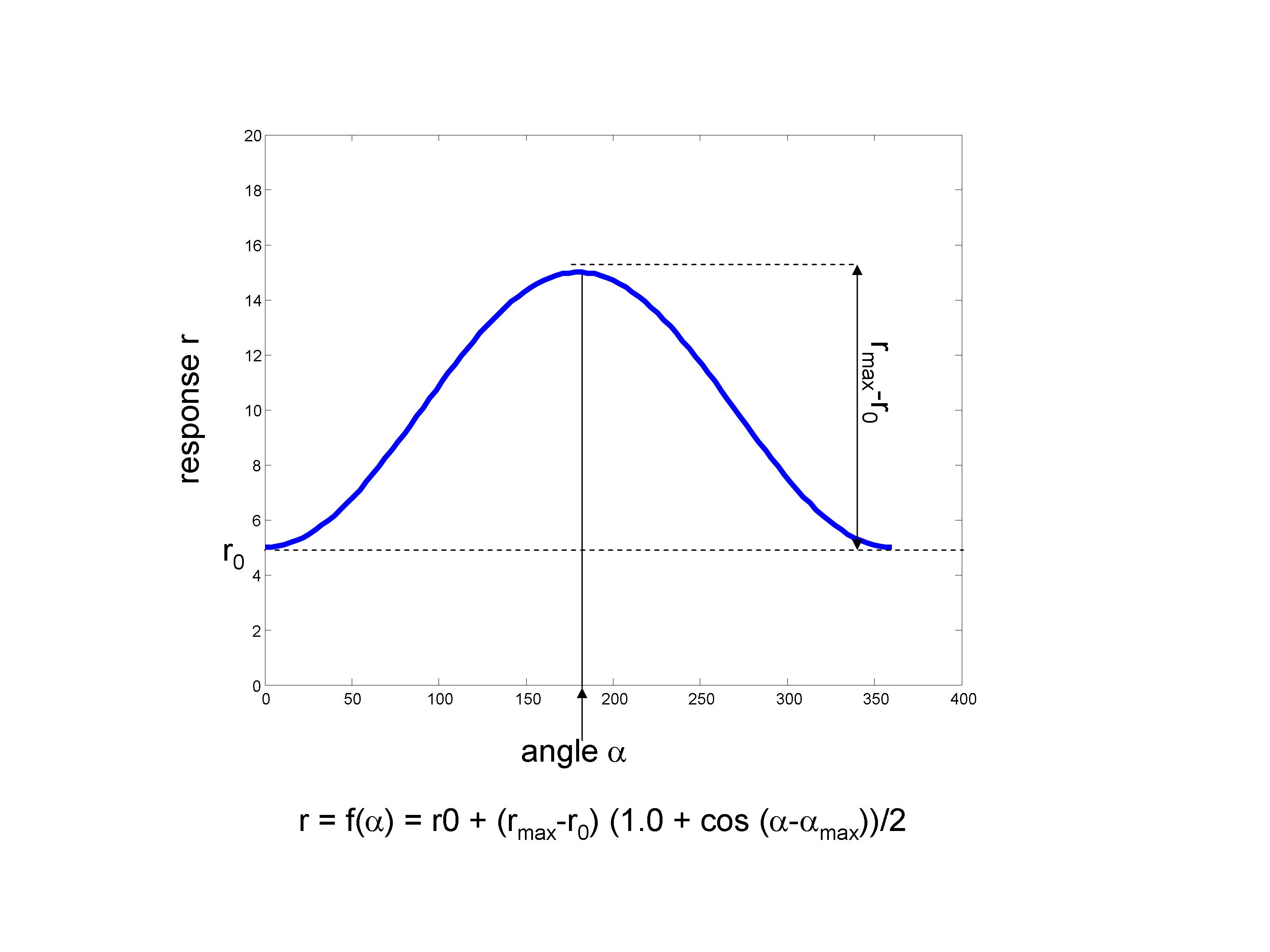
Receptive fields and tuning curves Reading: Chapin. J., Moxon, KA., Markowitz, RS. And Nicolelis, M (1999). Real-time control of a robot arm using simultaneously recorded neurons in the motor cortex. Nature Neuroscience, 2(7): 664. http://www.ncbi.nlm.nih.gov/pubmed/10404201 Homework: Tuning curves – due Sunday, 9-9 at 6pmSlides used in class
|
5 Lecture (Mon, 9/10) |
Quiz 1 – Lectures 2-4 - KEY Appendix 4: Mathematical aside 4-credit student Project 1: Color Blindness - indicate when you are available for discussion section here http://www.doodle.com/6kqkt8wmx68mehpk Slides used in class |
6 Lecture (Wed, 9/12) |
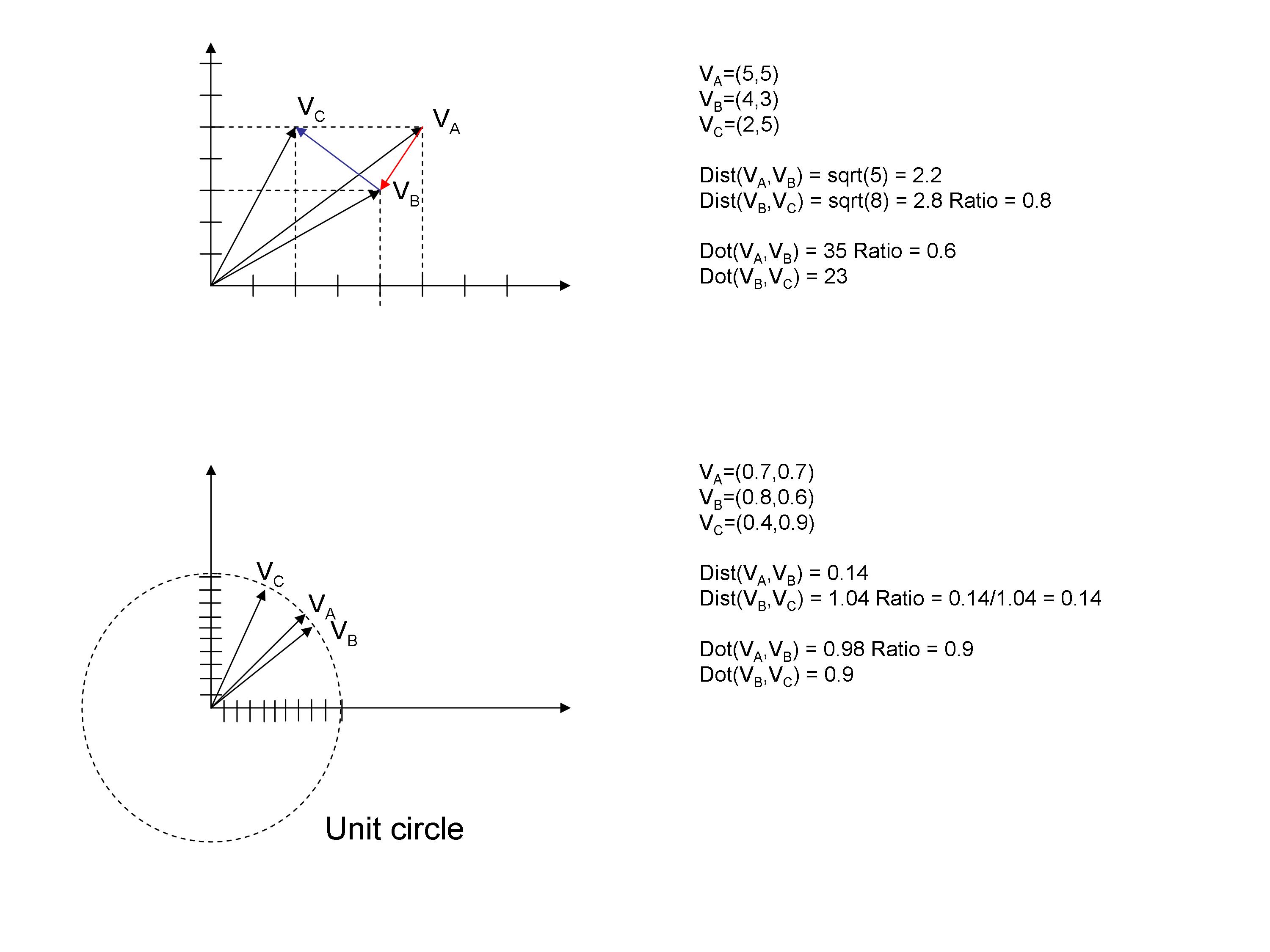
Tuning tuning curves – contrast enhancement – cortical circuits Reading: Barlow, RB (1969) Inhibitory fields in the Limulus lateral eye. J. Gen. Physiol. 54(3):383. http://www.ncbi.nlm.nih.gov/pubmed/5806596 Lab module: Receptive fields – due Sunday, 9-16 at 6pm Appendix: The structure of neocortical circuits Homework Population vector and contrast enhancement - due Sunday, 9-16 at 6pm - KEY Slides used in class |
7 Discussion (Mon, 9/17)
|
Applications, discussion, review 4-credit students Project 2: Contrast
|
| B. Beyong the basics: Temporal codes, oscillations, synchrony: Class Notes Part II | |
8 Discussion (Wed, 9/19)
|
Beyond firing rates – oscillations, synchrony and cell assemblies |
9 Lecture (Mon, 9/24) |
Quiz 2 - Lecture 2 - 7 - in class Representations in rate and synchrony Slides show in class |
10 Lecture (Wed, 9/26) |
Rate and temporal code – hippocampal place cells 4-credit students Project 3: Phase precession Blackboard quiz due Wednesday, 9/26 at 6pm Homework: Place cells due Tuesday, October 2nd at 6pm KEY Slides shown in class |
11 Lecture (Mon, 10/1) |
More about synchrony - was canceled Readings: Riehle A, Grun S, Diesmann M, and Aertsen A. Spike synchronization and rate modulation differentially involved in motor cortical function. Science 278: 1950-1953, 1997 Blackboard quiz due Monday, 10/1 at noon Slides shown in class |
12 lecture (Wed, 10/3) |
More about synchrony Readings: Riehle A, Grun S, Diesmann M, and Aertsen A. Spike synchronization and rate modulation differentially involved in motor cortical function. Science 278: 1950-1953, 1997 Slides shown in class |
(Mon, 10/8) Fall break - no lecture Plasticity - Class Notes Part III |
|
13 Lecture (Wed, 10/10) |
Review, catch up, discussion Homework: Hebbian Learning due Tuesday, 10-16 at 6pm KEY Lab module: Learning rules a) Hebbian learning due Tuesday, 10-16 at 6pm |
14 Lecture (Mon, 10/15) |
Quiz 3 Lectures 2-12 Tuning curves that change and adapt Feldman, DE and Brecht, M. Map plasticity in somatosensory cortex. Science. 2005 Nov 4;310(5749):810-5. and references therein. Slides used in class 4-credit student project 4: Knudsen’s data |
15 Lecture (Wed, 10/17) |
Memory models – Linear associator, auto-associator, Hopfield networks Lab module: Linear associator - due Friday, 10-26 at 6pm Slides used in class Homework: Associators, due Friday, 10-26 at 6pm |
16 Discussion (Mon, 10/22) |
Discussion, review examples - Canceled due to illness
|
17 Lecture (Wed, 10/24) |
Hopfield networks revisited, Neuromodulation, Review LabModule: Auto-associators due Tuesday, 10-30 at 6pm Homework - No HW, included in Associators Reading: Hasselmo ME.Neuromodulation and cortical function: modeling the physiological basis of behavior. Behav Brain Res. 1995 Feb;67(1):1-27. http://www.ncbi.nlm.nih.gov/pubmed/7748496 - Quiz on Blackboard due Wednesday 10-24 at noon |
| 18 Discussion (Mon, 10/29) | Guest lecture: To be announced Readings: |
19 Lecture (Wed, 10/31) |
Spike-timing-dependent plasticity: constructing a learning rule from data – data papers Slides used in class Homework: STDP - due Tuesday, 11/6 at 6pm |
| 20 Discussion (Mon, 11/5) | Applications of STDP Mehta MR, Quirk MC, and Wilson MA. STPD Experience-dependent asymmetric shape of hippocampal receptive fields. Neuron 25: 707-715, 2000. Yao H, Shen Y, and Dan Y. Intracortical mechanism of stimulus-timing-dependent plasticity in visual cortical orientation tuning. Proc Natl Acad Sci U S A 101: 5081-5086, 2004. Slides used in class 4-credit students project 5: STDP - Discussion Friday 11/17 at 3pm |
| 21 lecture (Wed, 11/7) | Review – Discussion Quiz 4 – Lectures 2-19 KEY
|
| Memory models: Class Notes Part IV | |
22 Lecture (Mon, 11/12) |
Models of human memory, why do we have a hippocampus Rolls ET, and Kesner RP. A computational theory of hippocampal function, and empirical tests of the theory. Prog Neurobiol 79: 1-48, 2006 - not mandatory Slides used in class |
23 Lecture (Wed, 11/14) |
Associative memory model of human memory Hasselmo ME, and Wyble BP. Free recall and recognition in a network model of the hippocampus: simulating effects of scopolamine on human memory function. Behav Brain Res 89: 1-34, 1997. Stress and memory: Becker, S, Macqueen, G and Wojtowicz, JM (2009) Computational modeling and empirical studies of hippocampal neurogenesis-dependent memory: Effects of interference, stress and depression. Brain Res. 2009 Nov 24;1299:45-54. Epub 2009 Aug 3.Homework due Tuesday, 11/20 at 6pm Slides used in class |
24 Discussion (Mon, 11/19) |
Working memory Lisman JE, and Idiart MA. Storage of 7 +/- 2 short-term memories in oscillatory subcycles. Science 267: 1512-1515, 1995
|
(Wed 11/21) Thanksgiving break - No Class |
|
25 Lecture (Mon, 11/26) |
Quiz5 Lectures 2-23 - Key Noradrenaline and signal-to-noise ratio Hasselmo ME, Linster C, Patil M, Ma D, and Cekic M. Noradrenergic suppression of synaptic transmission may influence cortical signal-to-noise ratio. J Neurophysiol 77: 3326-3339, 1997 |
26 Last lecture (Wed, 12/28) |
Discussion - games - fun
|